
“Don’t believe everything you think. Thoughts are just that—thoughts.”
— Allan Lokos, Pocket Peace
Like many people going through deep loss, I found myself caught in a mental loop—playing the same painful thoughts over and over in my head. Each time the reel started spinning, it stirred up more anger, sadness, and confusion. Sometimes I’d get so worked up, I felt like I could chew nails.
But one morning, something shifted. I was lying in bed, mentally replaying the usual scenes—arguments, regrets, what-ifs—and suddenly, I realized I was watching myself think those thoughts. That tiny moment of awareness changed everything. It was like stepping outside the storm. I wasn’t consumed by the pain; I was observing it. That small shift created a little space. And in that space, there was curiosity… and relief.
I realized how exhausting this internal noise had become. In Autobiography of a Yogi, Yogananda describes it as “roundy sensations and restless thoughts”—and that’s exactly what it feels like when you’re aware enough to notice, without being swept away.
When anger or resentment starts to rise, try this: take a deep breath and count backward from five. The goal isn’t to “fix” the feeling right away—it’s to create a pause, a gap between the trigger and your reaction.
And yes, your thoughts will take over sometimes. That’s normal. But each time you catch it, gently return to your breath. Each moment of awareness is a victory.
To help interrupt my own mental cycles, I began writing down the thoughts as they came. I tracked the emotional patterns—loss, anger, betrayal—and noticed how they kept circling back. That’s when I visualized a wheel, like a clock face, and began placing each thought at an “hour” around the circle. By the time I’d reached twelve, the loop would start over again. Endlessly.
It reminded me of an illustration from Understanding Comics by Scott McCloud
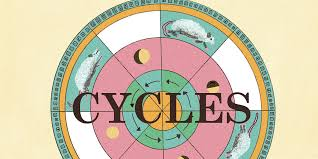
—how we fill in the gaps in stories without realizing it. That’s what the mind does too. It spins a narrative, then plays director, writer, and actor all at once.
Despite the many voices in my head, one dominant loop kept surfacing. And I came to see that it was fueled by emotional attachment—especially to ideas that the ego clings to. The ego thrives on control, judgment, and drama. It inflates the importance of others while tearing down your own sense of worth. It criticizes, blames, and keeps you trapped in emotional loops that block the more nurturing, loving part of you.
Ask yourself: has your ego ever truly helped in moments of deep stress? Or has it made things worse?
Because your true nature—beneath all the chatter—is love, peace, and presence.
To reclaim that truth, you must create space. Space between the thoughts. Space between the reaction and the response. Space to remember that you are a spiritual being having a human experience—sometimes messy, sometimes painful, but always meaningful. The drama just makes it more interesting (and yes, most of it is self-inflicted).
As you grow through these challenges, you’ll be offered choices: the choice to stay in pain or to open your heart, again and again. That’s how healing begins.
Vincent Cole from InnerSelf.com puts it beautifully:
“An ego-based identity seeks only that which strengthens it. All else is seen as a threat… Even a painful life is preferable to the ego than having to face the unknown.”
“Conflict arises during these periods of transition as you move from the past into the future, uncertain of the next step.”
Stopping the Cycle of Painful Thoughts
Ask yourself:
- What emotions and thoughts come up again and again?
- What recurring pains need to be seen, felt, and expressed?
Try this: for a week, write them down. Each time a thought or emotion arises—especially in the mornings, when you are just waking up—put it on paper. Track the themes. You’ll begin to notice a pattern.
And when those thoughts return, pull out your list and read it like a script from a familiar play. By doing this, you create a layer of emotional distance. You begin to observe the story instead of being trapped in it.
That act alone begins to dissolve the emotional charge. It’s like taking off a heavy coat you didn’t know you were wearing.
Eventually, I reached a point where I could picture my emotional wheel in my mind—and instead of getting pulled in, I’d smile and think, I’ve seen this show before. That simple awareness over time gave me the power to let it go.
“Clinging negative thoughts and unmet wants will feed the ego and become your next lesson.” — —B. Santistevan.
In times like this, it’s also valuable to examine your deeper beliefs—about yourself, about relationships, about life. Because the world often reflects those beliefs back to you.
Arnold Patent captures this truth in his Universal Principles:
“A belief is a thought hooked to a feeling. The feeling gives the thought a perception of power and creates an illusion experienced as real… The urge to explore life beyond our beliefs is a signal that our Soul Selves are ready to guide us in freeing the flow of Divine Love, disguised by our beliefs.”
He also said:
“An emotion is the love energy passed through a belief system.”
Creating Space: Moving from Head to Heart
The key to breaking free from painful thoughts is learning to create space between the thinking mind and your deeper awareness. That space is sacred. It’s where healing begins. It’s where forgiveness becomes possible.
Whenever I felt overwhelmed by my mental loops, I’d turn to my emotional wheel and read through it. Just seeing the patterns laid out made the thoughts lose their power. Over time, I no longer felt trapped. I felt lighter. More free.
As you do this, stay grounded in your body. Breathe deeply. Notice how emotions rise and fall. You’ll see that most intense thoughts don’t last forever. The trick is not to get hooked.
Yes, it takes time. And yes, it’s hard at first. But with each breath, each pause, each shift in awareness—you take back a little more control. You loosen the grip of the ego.
Eventually, those moments of clarity and calm will become more frequent. You’ll begin to recognize when the old tape is playing, and gently, you’ll press pause.
That’s how you begin to replace pain with love.
One of the most helpful perspectives I found during this journey comes from Pema Chödrön:“So when you’re like a keg of dynamite just about to go off, patience means just slowing down at that point—just pausing—instead of immediately acting on your usual, habitual response. You refrain from acting, you stop talking to yourself, and then you connect with the soft spot… Patience has nothing to do with suppression. In fact, it has everything to do with a gentle, honest relationship with yourself.”
— Pema Chödrön, The Pocket Pema Chödrön
